浮世绘的起源 | The Origins of Ukiyo-e

The Art of the Floating World

Ukiyo-e (浮世絵, "pictures of the floating world") is a genre of Japanese art that flourished from the 17th through 19th centuries. Its name derives from the Buddhist concept of "ukiyo" (浮世), meaning "floating world" - a term that originally referred to the transient nature of life but evolved to celebrate the pleasures of the present moment.

浮世之绘

浮世绘是日本江户时代(1603-1867)兴起的一种版画艺术形式。"浮世"一词源自佛教概念,意为"虚幻无常的尘世",但在江户时代演变为"享受当下、及时行乐"的生活态度。浮世绘正是这种"浮世"精神的视觉表达。

A Collaborative Art Form

Ukiyo-e was produced using woodblock printing, a collaborative process involving three specialists: the artist (eshi) who created the design, the carver (horishi) who carved the woodblocks, and the printer (surishi) who applied ink and pressed the paper. This division of labor allowed for mass production and widespread distribution of artworks.

协作艺术

浮世绘以木版印刷为主要制作方式,需要画师、雕师、摺师三者的密切配合。这种分工协作使得浮世绘能够批量生产并广泛传播,成为江户时代平民文化的重要组成部分。

浮世绘大师 | Ukiyo-e Masters

葛饰北斋

1760-1849

One of the greatest ukiyo-e artists, famous for the "Thirty-Six Views of Mount Fuji" series. His bold compositions and innovative style had profound influence on Western art.

代表作:
• 神奈川冲浪里(1830-1832)
• 富岳三十六景(全46景)
• 北斋漫画(15卷)

歌川广重

1797-1858

Renowned for landscape prints depicting Japan's scenic beauty and travel routes. His poetic compositions earned him the title "poet of travel."

代表作:
• 东海道五十三次(全55幅)
• 江户名所百景(全119幅)
• 木曾街道六十九次

喜多川歌麿

1753-1806

Master of bijin-ga (pictures of beautiful women), celebrated for his elegant depictions of Edo-period women and their refined sensibilities.

代表作:
• 妇人相学十体(全10幅)
• 虫绘(全12幅)
• 歌撰恋之部(全5幅)

东洲斋写乐

Active 1794-1795

Mysterious artist known for kabuki actor portraits. Active for only about 10 months, his exaggerated style revealed actors' inner worlds.

代表作:
• 大江户役者(全28幅)
• 役者舞台之姿绘(全5幅)

传世名作 | Masterpieces

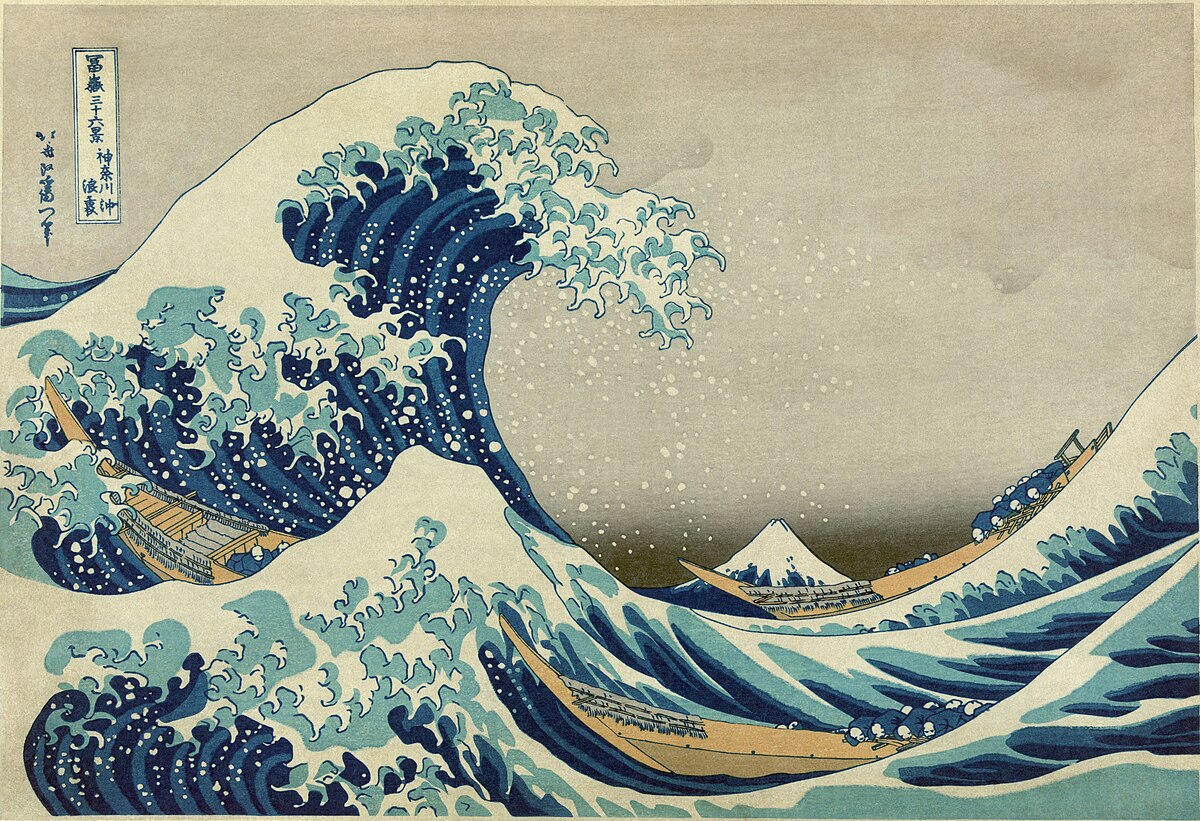
The Great Wave off Kanagawa

The Great Wave off Kanagawa

The most famous work from the "Thirty-Six Views of Mount Fuji" series, depicting a massive wave about to engulf three fishing boats with Mount Fuji visible in the distance. Its bold composition and dynamic lines made it an icon of Japanese art and profoundly influenced Western Impressionism.

神奈川冲浪里

《富岳三十六景》中最著名的一幅,描绘了巨大的海浪即将吞噬三艘渔船的惊险场景,远处的富士山在浪花中若隐若现。这幅作品以其大胆的构图和动感的线条,成为日本艺术的象征之一,对西方印象派产生了巨大影响。

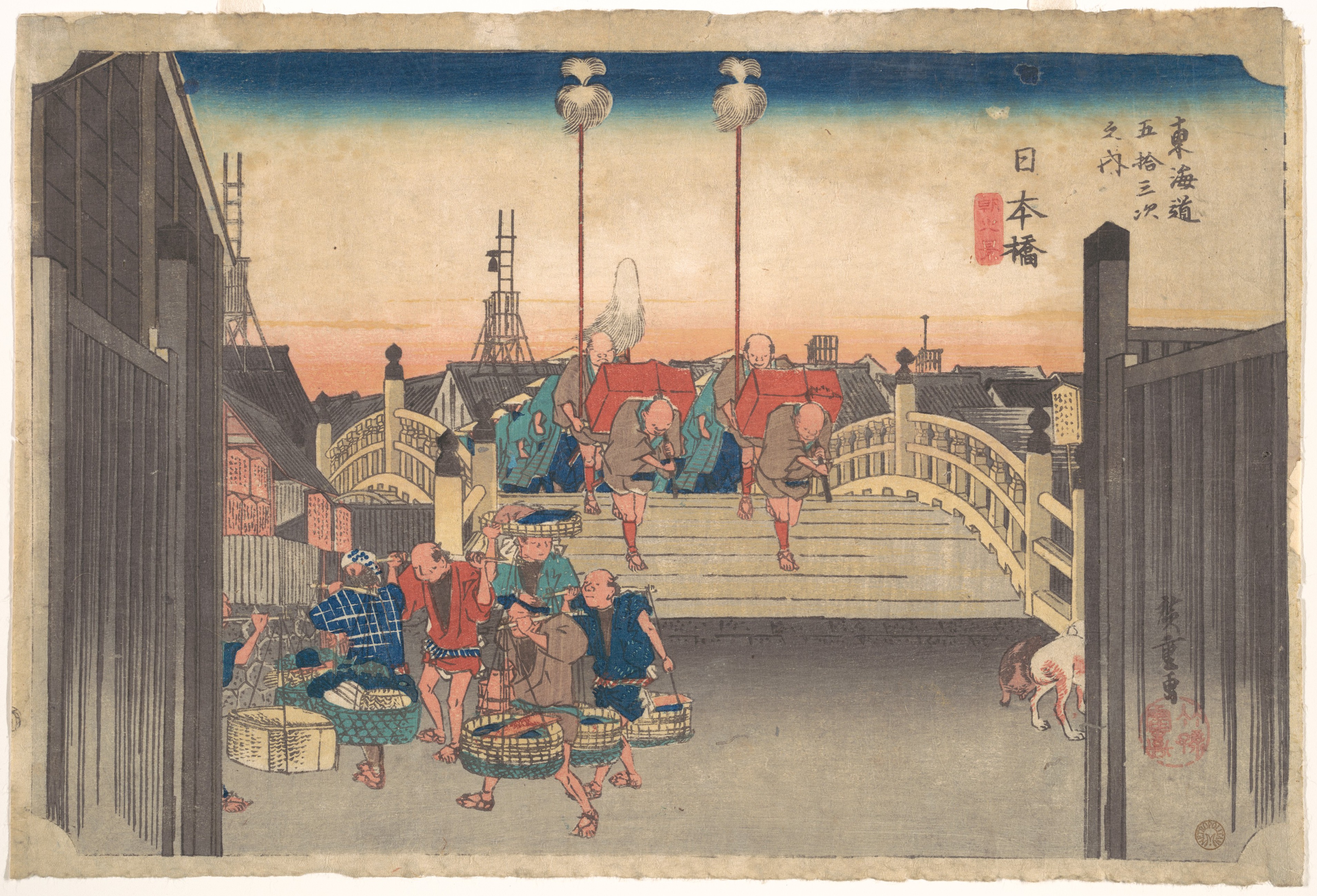
Nihonbashi - Morning Scene

Nihonbashi - Morning Scene

The opening work of the "Fifty-Three Stations of the Tōkaidō" series, depicting the morning scene at Edo's Nihonbashi bridge. Hiroshige's delicate brushwork and poetic atmosphere captured the starting point of the journey, making the entire series the pinnacle of ukiyo-e landscape art.

东海道五十三次 - 日本桥

《东海道五十三次》系列的开篇之作,描绘了江户日本桥的清晨景象。广重以细腻的笔触和诗意的氛围,展现了旅途的起点,整部系列被誉为"浮世绘风景画的巅峰"。

Fukagawa in the Snow

A masterpiece from the "One Hundred Famous Views of Edo" series, depicting the peaceful scene of Fukagawa after snowfall. Hiroshige's unique perspective and composition captured the serene beauty of the snowy landscape, earning it recognition as "the most beautiful snow scene in ukiyo-e."

深川の雪

《名所江户百景》系列中的杰作,描绘了深川地区雪后的宁静景象。广重运用独特的视角和构图,将雪景的静谧美表现得淋漓尽致,被誉为"浮世绘中最美的雪景"。

制作工艺 | Production Techniques

Ukiyo-e production was a complex collaborative process requiring close cooperation between the artist (eshi), carver (horishi), and printer (surishi). Here are the main steps:

1. Drawing (絵師, Eshi)

The artist creates the original design on paper, using brush to outline the forms and indicate colors. The artist is the core of the creative process, determining the artistic style and quality of the work.

2. Carving (彫師, Horishi)

The carver pastes the artist's design onto a wooden block (usually cherry or mountain cherry wood) and carves the pattern along the lines using carving tools. Each color requires a separate block, with complex works needing 10-20 blocks.

3. Printing (摺師, Surishi)

The printer applies pigment to the carved wooden block, covers it with Japanese paper (washi), and uses a baren (bamboo tool) to apply even pressure, transferring the pattern to the paper. Multi-color works require repeating this process with different colored blocks.

4. Color Techniques

墨摺(Sumizuri):Monochrome ink printing, the main form of early ukiyo-e.
红摺(Benizuri):Two-color printing adding red and green to the ink base.
锦绘(Nishiki-e):Multi-color printing technique invented in 1765, bringing ukiyo-e into the full-color era.