History of Sushi - 寿司的历史

Traditional Sushi - Edo Period Artwork

The Origins of Sushi

Sushi (すし, 寿司) is a traditional Japanese dish made with vinegared rice (sushi-meshi), typically seasoned with sugar and salt, and combined with a variety of ingredients (neta), such as seafood, vegetables, or meat. Raw seafood is the most common, although some may be cooked.

The earliest written mention of sushi in English was in 1893, describing it as "a roll of cold rice with fish, sea-weed, or some other flavoring." The original technique involved fermenting fish with rice and salt to preserve seafood for months during travel. This ancient process, called Narezushi, originated in Southeast Asia and spread to China before reaching Japan around the 8th century.

寿司的历史

寿司是一种传统的日本料理,由醋饭(寿司饭)制成,通常用糖和盐调味,并与各种食材(鱼生)搭配,如海鲜、蔬菜或肉类。生海鲜最常见,但有些也会煮熟。

最早的寿司英文记载出现在1893年,将其描述为"一卷冷饭,配以鱼、海藻或其他调味品"。最初的技术涉及用米饭和盐发酵鱼类,以便在旅行中保存数月。这种古老的过程称为熟寿司,起源于东南亚,传播到中国,然后在8世纪左右传入日本。
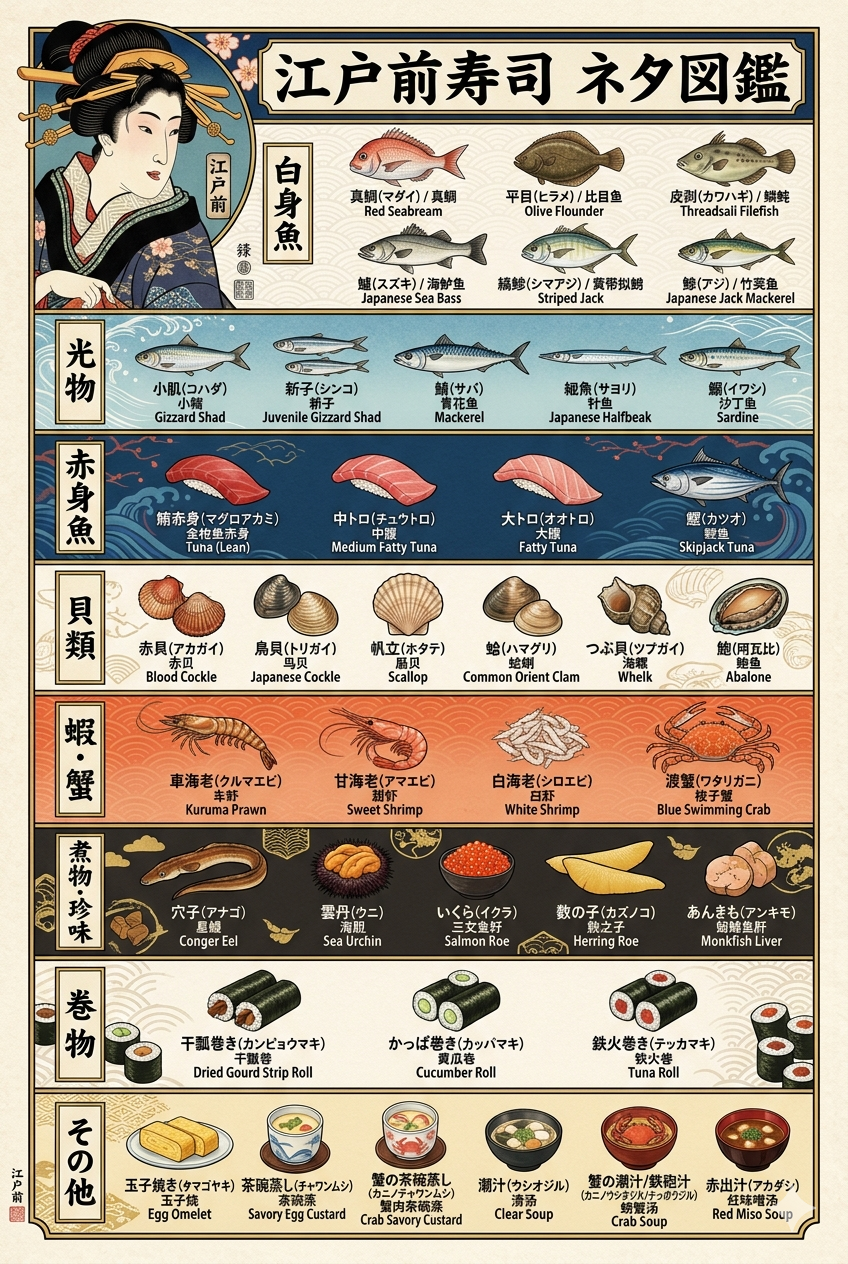
Edo-mae Sushi Ingredients - 江户前寿司食材一览

Edo Sushi Menu
Category
分类
Japanese
日文名
Chinese
中文名
English
英文名
Notes / Seasoning
备注 / 调味方式
White Fish
白身鱼
真鯛(まだい) 真鲷 Red Seabream 昆布缔め、酱油轻渍,江户前白身代表
平目(ひらめ) 比目鱼 Olive Flounder 缘侧(えんがわ)常用,口感脆
皮剥(かわはぎ) 鳞鲀 Threadsail Filefish 肝酱油(肝和え)为经典搭配
鱸(すずき) 海鲈鱼 Japanese Sea Bass 夏季白身,常用昆布缔め
あこう / 九絵(くえ) 石斑鱼 Red-spotted Grouper / Longtooth Grouper 冬季白身高级种,皮炙烤
縞鯵(しまあじ) 黄带拟鲹 / 缟鲹 Striped Jack 油脂高,常生缔或昆布缔め
鯵(あじ) 竹荚鱼 Japanese Jack Mackerel 光物兼白身,多用生姜、葱调味
Silver-Skinned Fish
光物
(银身鱼)
小肌(こはだ) 小鳍 Gizzard Shad 盐醋腌制,江户前"格付"代表
新子(しんこ) 新子 Juvenile Gizzard Shad 小肌幼鱼,夏季数尾一贯
鯖(さば) 青花鱼 Mackerel 昆布缔め或醋腌,常用白板昆布
細魚(さより) 针鱼 Japanese Halfbeak 春季光物,清淡,生姜调味
鰶(このしろ) 鰶鱼 Dotted Gizzard Shad 成鱼,秋季美味,盐醋处理
鰯(いわし) 沙丁鱼 Sardine 鲜度要求极高,配葱、姜泥
秋刀魚(さんま) 秋刀鱼 Pacific Saury 秋季代表,盐烤或生握配生姜
Red Fish
赤身鱼
鮪 赤身(まぐろ あかみ) 金枪鱼赤身 Tuna (Lean) 酱油渍(づけ)为传统
中トロ 金枪鱼中腹 Tuna (Medium Fatty) 赤身与脂肪平衡
大トロ 金枪鱼大腹 Tuna (Fatty) 最肥美部分,多用于"格付け"
鰹(かつお) 鲣鱼 Skipjack Tuna / Bonito 藁焼き(稻草熏)、配生姜或葱
サーモン 三文鱼 Salmon 非传统江户前,现代店常见
Shellfish
贝类
赤貝(あかがい) 赤贝 Blood Cockle 活缔后握,口感脆甜
鳥貝(とりがい) 鸟贝 Japanese Cockle 春季贝类,形状似鸟翼
青柳(あおやぎ) 青柳 Japanese Sunset Clam 常用"ひも"(贝足)做军舰
帆立(ほたて) 扇贝 Scallop 鲜甜,可用贝柱或贝足
蛤(はまぐり) 蛤蜊 Common Orient Clam 火烤或煮后握,也常用作潮汁
つぶ貝 海螺 Whelk 脆硬口感,咸鲜味
鮑(あわび) 鲍鱼 Abalone 煮鲍、肝酱、酒蒸等多种处理
Shrimp & Crab
虾/蟹
車海老(くるまえび) 车虾 Kuruma Prawn 活煮后剥壳握,江户前经典
甘海老(あまえび) 甜虾 Sweet Shrimp 生食为主,北海道产多
白海老(しろえび) 白虾 White Shrimp 富山湾名产,数只捏一贯
渡蟹(わたりがに) 梭子蟹 Blue Swimming Crab 煮熟取肉,军舰或散寿司
Cooked Items & Delicacies
煮物/珍味
穴子(あなご) 星鳗 Conger Eel 煮后刷甜酱汁(つめ),江户前定番
鮑の煮物 煮鲍鱼 Simmered Abalone 柔软入味,常切片握
蛸の煮物 煮章鱼 Simmered Octopus 盐搓后煮软,握或切片
雲丹(うに) 海胆 Sea Urchin 军舰卷,马粪、紫海胆为主
いくら 三文鱼籽 Salmon Roe 酱油渍后做军舰卷
数の子(かずのこ) 数之子 Herring Roe 新年食材,口感脆硬
塩辛(しおから) 盐辛 Salted Fermented Seafood 乌贼内脏为主,酒肴
あんきも 鮟鱇鱼肝 Monkfish Liver 蒸后切片,配ポン酢或做军舰
Rolls
卷物
干瓢巻き(かんぴょうまき) 干瓢卷 Dried Gourd Strip Roll 传统细卷,甘甜味
かっぱ巻き 黄瓜卷 Cucumber Roll 清爽经典
鉄火巻き(てっかまき) 铁火卷 Tuna Roll 赤身卷,经典细卷
納豆巻き 纳豆卷 Fermented Soybean Roll 多用于平价店或早餐
桜でんぶ巻き 樱花粉卷 Pink Fish Floss Roll 甜味鱼松,多为儿童向
Other Items
其他
玉子焼き(たまごやき) 玉子烧 Egg Omelet 江户前厚蛋烧,微甜,作为"收尾"
茶碗蒸し 茶碗蒸 Savory Egg Custard 含鸡肉、虾、银杏、香菇、三つ葉等
蟹の茶碗蒸し 蟹肉茶碗蒸 Crab Savory Egg Custard 茶碗蒸的变种,加入蟹肉、蟹味噌
吸い物(おすまし) 清汤 Clear Soup 出汁为基底,简单调味
潮汁(うしおじる) 潮汁 Clam Soup 以蛤蜊为主,盐味清汤
蟹の潮汁 / 鉄砲汁 螃蟹汤 / 铁炮汁 Crab Soup / Teppō-jiru 用蟹壳、蟹脚熬制,味噌或清汤底,江户前店常见冬季提供
味噌汁(みそしる) 味噌汤 Miso Soup 部分店提供,非传统江户前主流,但现代常见
赤出汁(あかだし) 红味噌汤 Red Miso Soup 豆味噌基底,风味浓厚

About "Neta" and Course Structure

In Edo-mae sushi "omakase" courses, chawanmushi and osuimashi (ushio-jiru, etc.) are warm dishes served in the "middle" or "finale" sections, alternating with sushi to cleanse the palate and warm the stomach.

Crab Soup (蟹の潮汁 / 鉄砲汁)

Teppō-jiru is a Japanese term for crab soup, originating from standing crab legs upright in the pot "like cannons." Commonly uses watarigani (blue swimming crab) or zuwaigani (snow crab), the soup base can be clear soup (ushio-jiru) or red miso (aka-dashi), especially common in winter. In high-end sushi shops, crab soup often appears as a replacement for clam ushio-jiru, reflecting seasonal awareness.

Chawanmushi Variations

Besides the basic version, high-end shops add luxurious ingredients like crab meat, monkfish liver, sea urchin, truffles, etc., creating rhythm contrast with sushi. Sometimes appears as "kaburi-mushi" (turnip steamed), but chawanmushi remains the most common warm dish.

Seasoning Methods

The table includes brief explanations of "seasoning/preparation methods" closer to traditional Edo-mae cooking techniques like "kombu-jime" (kelp-wrapping), "shoyu-zuke" (soy sauce marinade), "shio-su shori" (salt-vinegar treatment), etc.